Thursday, January 29, 2026

The Ultimate 2026 Supplement Guide: Targeted Essentials for Metabolic Health, Performance, Recovery, and Longevity
2026 EDITION
12 min read

The Ultimate 2026 Supplement Guide

Targeted Essentials for Metabolic Health, Performance, Recovery, and Longevity

As we step into 2026, the supplement landscape has evolved beyond generic multivitamins and hype-driven stacks. Trends emphasize targeted, evidence-informed choices that support specific goals: metabolic resilience, workout performance, stress recovery, better sleep, and healthy aging.

Longevity research highlights autophagy, methylation, oxidative stress reduction, and connective tissue support, while performance nutrition focuses on energy buffering and inflammation control.

This guide outlines a practical, use-case-driven selection of 13 supplements. These are chosen for their well-supported mechanisms and relevance to common 2026 priorities—higher training loads, carb cycling, chronic stress, intermittent fasting, and optimized daily function. Dosages are typical ranges from research and practical application; always prioritize third-party tested products and consult a healthcare provider.

01

Carnosine – The Glycation Protector

Use case:Higher carbohydrate periods or metabolic stress
Typical dosage:500–1,000 mg

Carnosine scavenges carbonyl compounds to limit advanced glycation end products (AGEs), which form when excess glucose reacts with proteins or fats. This preserves insulin sensitivity, mitochondrial efficiency, and vascular health—key for metabolic resilience amid modern diets.

02

Taurine – Performance and Oxidative Stress Buffer

Use case:Intense workouts, high-volume training, or aerobic efforts
Typical dosage:3–6 g pre-workout

Taurine boosts time to exhaustion, VO2 max, and recovery from oxidative load. Muscle taurine rises post-exercise, signaling its demand for endurance and anti-fatigue effects. It's a staple in 2026 performance and longevity discussions.

03

Serine – Stress and Detox Support

Use case:Elevated allostatic load (training + life stress)
Typical dosage:1–2 g

As a precursor to phosphatidylserine, serine stabilizes cell membranes and curbs inflammation. It donates carbon for glutathione recycling, enhancing phase II detoxification and inflammatory balance—vital in high-stress environments.

04

Collagen + Whey Protein (Combined Post-Workout)

Use case:Strength training or mixed resistance/aerobic sessions
Typical dosage:Blended in shakes (standard serving each)

Training damages both muscle and connective tissue. Combining whey (for myofibrillar synthesis) with collagen (for connective repair) optimizes recovery. Structural nutrition trends in 2026 highlight this for active aging and metabolic health.

05

TMG (Trimethylglycine / Betaine) – Methylation Master

Use case:Cycled for metabolic and body composition support
Typical dosage:1–3 g daily in cycles (e.g., 4 weeks on/off)

As a methyl donor, TMG lowers homocysteine, reduces oxidative stress, and supports liver fat clearance. It aids insulin signaling, mitochondrial function, and favorable body comp changes—aligning with methylation-focused longevity protocols.

06

Creatine – The All-Around Energy & Anti-Inflammatory

Use case:Daily for performance, recovery, or metabolic support
Typical dosage:3–5 g maintenance

Creatine reloads ATP, offloads cellular energy stress, and lowers inflammation. It's surging in 2026 for brain health, vitality, and broad metabolic benefits beyond gym-goers.

07

Allulose – Carb Meal Buffer

Use case:Cheat meals or higher-carb days
Typical dosage:~1 tablespoon with food

This rare sugar competes with fructose absorption and modulates glucose transporters during spikes—practical for metabolic flexibility in real-world eating.

08

High-Potency Honey (e.g., MGO 850+ Manuka)

Use case:Antioxidant/prebiotic boost (low-carb intent)
Typical dosage:Teaspoons

Rich in polyphenols for targeted oxidative defense and gut support—beyond simple carbs.

09

Glycine – Sleep and Neuroprotection

Use case:Evening wind-down
Typical dosage:3 g ~1–2 hours before bed

Glycine calms the nervous system, supports antioxidant activity, and improves sleep architecture while easing nighttime bladder urgency—enhancing restorative rest.

10

Magnesium (Glycinate, Threonate, Malate, Taurate)

Use case:Daily energy, focus, and recovery
Typical dosage:400–1,000 mg elemental (bioavailable forms)

Essential for ATP, neuromuscular function, and workout performance. Preferred forms avoid GI issues; magnesium remains a breakout trend for overall vitality.

11

Glutamine – Gut, Immune, and Calm Support

Use case:Hard training or recovery needs
Typical dosage:5–10 g around sessions

Maintains gut barrier, fuels glutamate-to-GABA conversion for parasympathetic calm, and bolsters immunity—countering anxiety from depletion.

12

Saffron – Targeted Sleep Enhancer

Use case:Occasional high-quality sleep nights
Typical dosage:28 mg

Trials show better onset, duration, REM/deep stages, and morning mood—reliable for occasional optimization.

13

Spermidine – Autophagy Extender

Use case:End of extended fasts
Typical dosage:As directed in products

Promotes autophagic flux as a fasting mimetic, extending cellular cleanup. Longevity trends spotlight spermidine for healthy aging and repair.

Key Takeaways for 2026

  • Prioritize use cases over daily megadosing—cycle where appropriate (e.g., TMG).
  • Focus on quality: Seek third-party testing for purity, potency, and low contaminants.
  • Individualize: Factors like diet, genetics, training, and health status influence response.
  • Synergy matters: Many (e.g., magnesium + glycine, collagen + whey) work best combined.

Supplements support—but never replace—fundamentals: nutrient-dense food, movement, sleep, and stress management. In 2026, the smartest approach is evidence-driven, personalized optimization for healthspan, not just lifespan.

Community question

What’s in your 2026 cabinet?

Share your targeted stack in the comments!

This content is for informational purposes only and is not intended as medical advice. Always consult with a qualified healthcare professional before starting any new supplement regimen. Individual results may vary.

Thursday, January 1, 2026

Understanding Mitochondrial Dysfunction and the Role of Spermidine in Aging

Understanding Mitochondrial Dysfunction and the Role of Spermidine in Aging

Many experience declining energy, slower recovery, and metabolic slowdown with age, even while maintaining healthy habits like exercise and nutrition. The root cause often lies not in lack of discipline or calories, but in mitochondrial dysfunction: damaged mitochondria fail to efficiently use energy from food, leading to fatigue, inflammation, insulin resistance, and reduced cognitive function.

Mitochondria Structure

Detailed cross-section of a mitochondrion showing key internal structures.

Mitochondrial Dysfunction in Aging

As cells age, mitochondria become damaged, leak reactive oxygen species (ROS), produce ATP inefficiently, and accumulate instead of being recycled. This accumulation exacerbates energy loss and systemic issues.

Mitochondrial Dysfunction

Mitochondrial dysfunction contributes to oxidative stress, inflammation, and aging.

Mitophagy: The Cellular Cleanup System

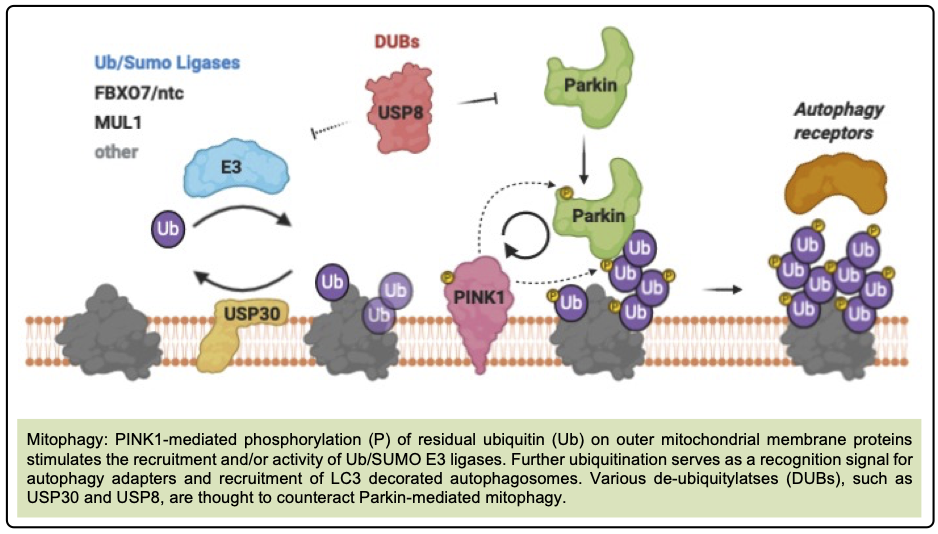
Mitophagy is a targeted form of autophagy that recycles damaged mitochondria. It relies on proteins PINK1 (which accumulates on dysfunctional mitochondria) and Parkin (which tags them for degradation).

Spermidine enhances this process by promoting PINK1 accumulation and Parkin translocation, facilitating removal of damaged mitochondria and reducing oxidative stress.

Mitophagy Process

The mitophagy process: damaged mitochondria are selectively removed via autophagy.

Spermidine’s Mechanisms

Spermidine, a natural polyamine, supports mitochondrial quality control rather than directly adding energy.

  • It activates mitophagy for better cleanup.
  • It inhibits the acetyltransferase EP300, reducing excessive protein acetylation in mitochondria. Over-acetylation impairs electron transport, lowers ATP output, and increases ROS; spermidine reverses this for cleaner, more efficient function.
Spermidine Molecule

Chemical structure of spermidine.

Link to Fasting and Longevity

Spermidine mediates many fasting benefits. In model organisms, blocking spermidine synthesis abolishes fasting-induced autophagy and lifespan extension; restoring it revives them. Spermidine amplifies caloric restriction pathways but does not fully replace fasting’s broad effects.

Timing with Circadian Rhythms

Autophagy and mitophagy follow circadian patterns, peaking in fasted states with low insulin and mTOR. Time-restricted eating aligned to earlier feeding windows enhances these; late-night eating suppresses them.

Taking spermidine toward the end of a fasting period (earlier in the day) optimizes mitochondrial renewal.

Rebuilding After Cleanup

Mitophagy clears damage, but new mitochondria require raw materials. Post-fasting refeeding with high-quality nutrients—particularly protein—supports mitochondrial biogenesis and stronger replacements. Cyclical patterns (clearance followed by nutrition) outperform constant restriction.

Practical Recommendations

  • Focus on removing energy wasters through mitochondrial cleanup for sustainable vitality.
  • Align spermidine and fasting signals with low-insulin periods earlier in the day.
  • Use spermidine to support—not replace—time-restricted eating, exercise, and habits.
  • Refeed adequately with protein-rich meals to rebuild mitochondria.
  • Emphasize consistency: repeated small signals compound better than extremes.
  • Build on foundational practices like balanced diet, movement, and sleep.

These mechanisms reveal how spermidine counters age-related decline by restoring mitochondrial efficiency.

References

  1. Qi Y, et al. ATM mediates spermidine-induced mitophagy via PINK1 and Parkin regulation in human fibroblasts. Scientific Reports. 2016. Read Paper
  2. Pietrocola F, et al. Spermidine induces autophagy by inhibiting the acetyltransferase EP300. Cell Death & Differentiation. 2015. Read Paper
  3. Hofer SJ, et al. Spermidine is essential for fasting-mediated autophagy and longevity. Nature Cell Biology. 2024. Read Paper

Supplements a 44-Year-Old Takes to Feel Like He’s 24

The goal: feel vibrant at any age 7 Supplements a 44-Year-Old Takes to Feel Like He’s 24 A bloodwork-...